Grounds for Change: Five Evidence-Based Biodiversity Strategies Universities Can Implement Now
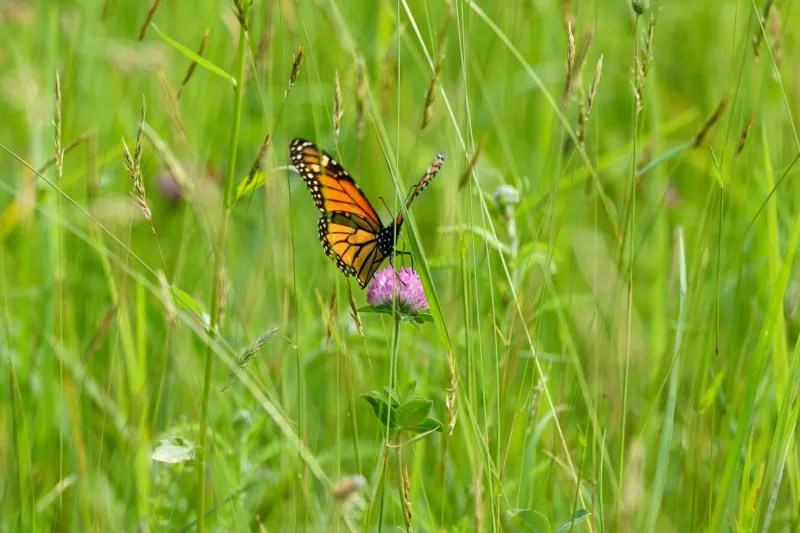
The American university campus is, from an ecological standpoint, a peculiar landscape. It is simultaneously a site of intensive human activity and, in many cases, a substantial tract of managed greenspace that could—with deliberate stewardship—support meaningful biodiversity. The typical large research university manages anywhere from dozens to thousands of acres of lawns, ornamental plantings, riparian margins, and woodland edges. That land is currently doing ecological work of some kind. The question is whether it is doing the right kind.
The encouraging answer, supported by a growing body of peer-reviewed research, is that relatively modest interventions can produce measurable ecological gains—often at costs that compare favorably to the maintenance budgets already being spent on conventional grounds management. What follows is a review of five strategies with strong empirical support, drawn from documented case studies at peer institutions and the scientific literature underpinning them.
1. Lawn Conversion to Native Meadow Plantings
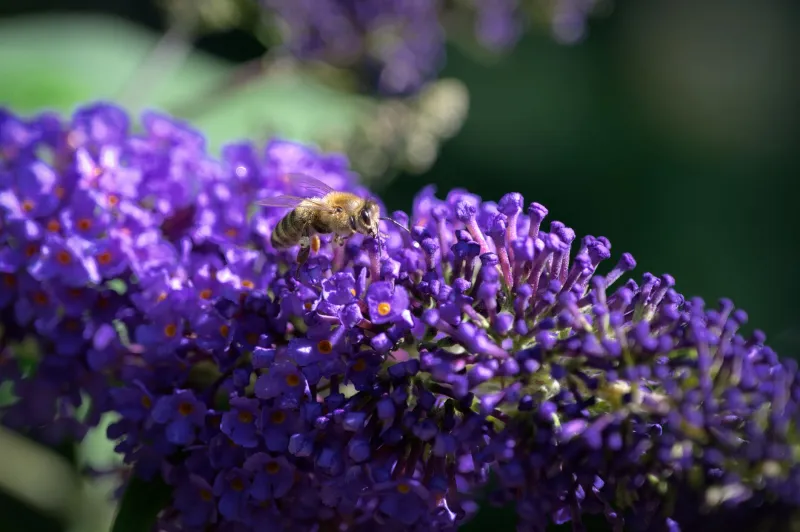
The Evidence: Research published in Biological Conservation and Urban Ecosystems consistently demonstrates that replacing turfgrass monocultures with native wildflower and grass plantings significantly increases arthropod diversity, supports ground-nesting bee populations, and improves soil carbon sequestration. A landmark study by the Xerces Society for Invertebrate Conservation documented 300 percent increases in native bee species richness at converted sites within three growing seasons.
The Campus Application: The University of Maryland's Arboretum and Botanical Garden converted approximately 12 acres of conventional lawn to native meadow between 2018 and 2022, documenting a 240 percent increase in pollinator activity and reducing annual mowing costs by an estimated $18,000 per year. The initial establishment cost—seed procurement, site preparation, and the first two years of targeted weed management—totaled roughly $4,500 per acre, a figure recovered through maintenance savings within four years.
The key implementation insight from Maryland and similar programs is that the conversion process requires front-loaded investment in site preparation and early weed suppression. Institutions that skip this phase frequently experience establishment failures that generate campus skepticism and set back future conservation efforts. Done correctly, native meadow plantings are among the most cost-effective biodiversity investments available to campus grounds departments.
2. Dark-Sky-Compliant Lighting Modifications
The Evidence: Artificial light at night (ALAN) is an increasingly recognized driver of insect population decline, with particular consequences for nocturnal pollinators, migratory birds, and light-sensitive amphibians. Research from the University of Exeter and the German Centre for Integrative Biodiversity Research has demonstrated that switching from broad-spectrum white LED fixtures to amber or narrowband LED alternatives can reduce insect attraction by up to 50 percent while maintaining equivalent illumination for human use.
The Campus Application: Colby College in Maine completed a campus-wide lighting audit in 2021 as part of its commitment to International Dark-Sky Association standards, retrofitting approximately 400 exterior fixtures with amber LED units. The project reduced the college's outdoor lighting energy consumption by 34 percent and generated documented improvements in moth diversity on campus grounds within a single season, as measured by light-trap surveys conducted by student researchers.
The cost profile of lighting retrofits is particularly attractive because the technology investment is often partially or fully offset by energy savings within a five-to-seven-year window, depending on utility rates and fixture replacement cycles. Institutions that are already planning LED upgrades for energy reasons should treat biodiversity-compatible light spectrum selection as a no-cost add-on to an existing capital project.
3. Stormwater Green Infrastructure With Ecological Design
The Evidence: Bioretention cells, vegetated swales, and constructed wetlands—collectively termed green stormwater infrastructure (GSI)—are well-established tools for managing urban runoff. Their biodiversity co-benefits, however, are often underutilized in conventional engineering designs. Research from the Urban Land Institute and multiple peer-reviewed studies in Ecological Engineering demonstrate that GSI systems planted with ecologically appropriate native species, rather than generic ornamentals, support substantially higher invertebrate and amphibian diversity while maintaining equivalent hydrological performance.
The Campus Application: Villanova University's stormwater management program, one of the most extensively studied GSI systems in the northeastern United States, has documented significant macroinvertebrate diversity in its network of bioretention cells—diversity that correlates directly with the proportion of native plantings in each cell's design. The university's ongoing monitoring program, which involves undergraduate and graduate researchers, has generated more than a dozen peer-reviewed publications while simultaneously providing campus grounds managers with actionable data for system optimization.
The research-integration model pioneered at Villanova is particularly replicable at institutions with environmental science or civil engineering programs. GSI systems designed as living research platforms can attract external grant funding that partially offsets capital costs, while providing students with field research opportunities that strengthen program recruitment and retention.
4. Campus Forest Inventory and Selective Deadwood Retention
The Evidence: Deadwood—standing snags, fallen logs, and decaying limbs—is among the most ecologically productive structural elements in temperate forest ecosystems, supporting an estimated 20 to 30 percent of forest-dependent species including cavity-nesting birds, saproxylic beetles, and wood-decomposing fungi. Standard campus grounds practices typically call for the removal of dead and dying trees as safety hazards, a policy that, while not without legitimate basis, is frequently applied more broadly than safety considerations strictly require.
The Campus Application: Yale University's campus forest management plan, revised in 2019 following a comprehensive ecological inventory, incorporated selective deadwood retention protocols that preserve structurally stable snags and fallen logs in lower-traffic woodland areas. The program identified approximately 15 percent of campus woodland acreage as suitable for enhanced deadwood retention without meaningful safety compromise. Subsequent monitoring by Yale School of the Environment researchers documented rapid colonization by cavity-nesting species, including red-bellied woodpeckers and eastern bluebirds, within two breeding seasons.
The cost implication of deadwood retention is, in most cases, negative—meaning the practice saves money by reducing tree removal and disposal expenses. The primary institutional barrier is not financial but cultural: grounds departments accustomed to maintaining manicured landscapes require explicit administrative support and clear policy guidance to implement retention protocols that may initially appear inconsistent with conventional maintenance standards.
5. Integrated Pest Management Transition and Pesticide Phase-Out
The Evidence: Conventional pesticide use on campus grounds—including herbicides, insecticides, and fungicides—contributes to the decline of non-target invertebrate populations, soil microbial communities, and the birds and mammals that depend on them. The scientific case for transitioning to integrated pest management (IPM) frameworks, which minimize chemical intervention through habitat management, biological controls, and threshold-based treatment decisions, is extensive and well-established in the agronomic literature.
The Campus Application: The University of California, Davis—appropriately, given its agricultural research heritage—has operated under a campus IPM program since the 1980s, and its documented outcomes provide a strong template for peer institutions. Davis reports pesticide use reductions exceeding 70 percent from pre-IPM baselines, with no significant increase in pest damage to turf or ornamental plantings. The program's annual operating cost is comparable to conventional chemical management, with savings in pesticide procurement partially offsetting the additional labor required for monitoring and threshold assessment.
For institutions beginning an IPM transition, phased implementation by zone—starting with natural areas and riparian buffers, then expanding to athletic fields and high-visibility ornamental beds—allows grounds staff to develop competency incrementally while generating early monitoring data that builds institutional confidence in the approach.
The Compounding Return on Ecological Investment
What unites these five strategies is a pattern that environmental scientists will recognize from restoration ecology more broadly: ecological interventions tend to generate compounding returns as habitat quality improves, species communities establish, and ecosystem processes become self-reinforcing. A campus that implements native meadow plantings, reduces light pollution, installs ecologically designed GSI, retains deadwood, and eliminates unnecessary pesticide use is not merely adding five independent benefits—it is creating the conditions for a functioning ecological network in which each element supports the others.
The research basis for each of these strategies is sufficiently robust to support institutional commitment without waiting for additional evidence. The financial case, in most instances, is equally compelling. What remains is the institutional will to treat campus land not merely as a backdrop for academic activity, but as an ecological asset worthy of the same rigorous stewardship that universities bring to their scientific and educational missions.