Rebuilding Pollinator Corridors: Five Research-Backed Strategies for Urban and Suburban Landscapes
Why Urban Landscapes Are Both the Problem and the Solution
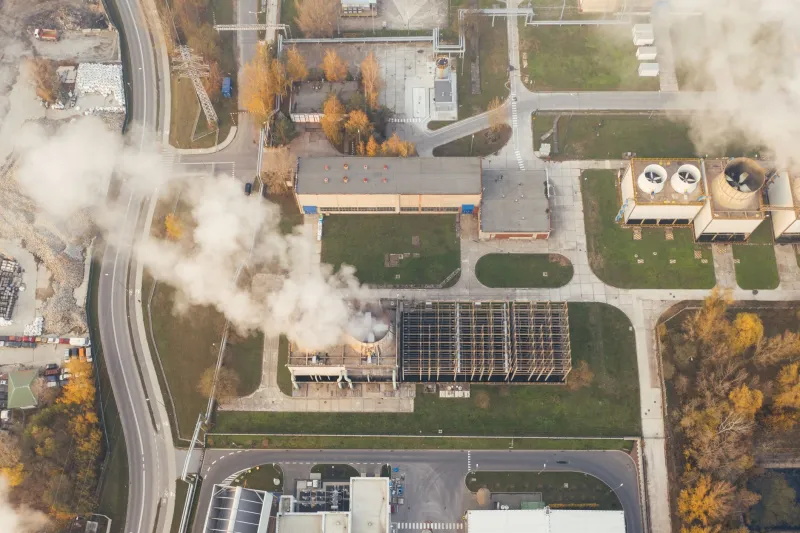
The United States loses an estimated 6,000 acres of natural habitat every day to development and land conversion. For pollinators—bees, butterflies, moths, beetles, and flies that collectively support one-third of the global food supply—this habitat fragmentation has been catastrophic. Native bee populations have declined by as much as 23 percent across North America since 2008, according to a landmark study published in PNAS, and monarch butterfly populations have fallen by more than 85 percent over the past three decades.
And yet the same suburban and urban landscapes that drove much of this decline may also hold the greatest near-term potential for restoration. Residential yards, municipal parks, road verges, and commercial green spaces collectively constitute tens of millions of acres across the continental United States—area that, if managed with ecological intentionality, could function as a distributed network of pollinator refugia. The science on how to accomplish this is more developed than many land managers realize.
Here are five strategies grounded in peer-reviewed ecology that any homeowner, municipality, or institutional grounds manager can begin implementing now.
1. Prioritize Native Plant Diversity Over Ornamental Monocultures
The foundational insight of pollinator restoration ecology is deceptively simple: native bees evolved alongside native plants, and their nutritional needs are often met inadequately—or not at all—by the ornamental cultivars that dominate American landscaping. A 2015 study in Ecological Applications found that native plant species supported 4 times as many native bee species as non-native ornamentals, even when floral abundance was held constant.
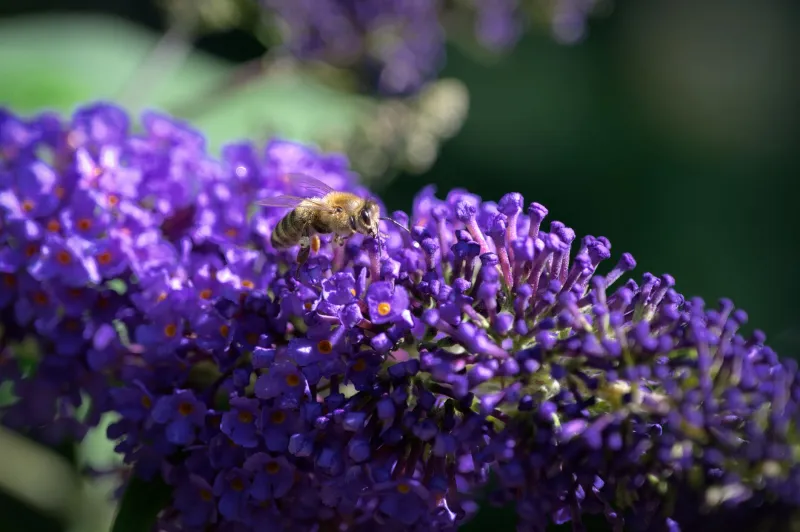
For the northeastern United States, ecologists consistently recommend species such as wild bergamot (Monarda fistulosa), purple coneflower (Echinacea purpurea), and various goldenrods (Solidago spp.) as high-value pollinator plants with broad seasonal utility. In the Pacific Northwest, blue camas (Camassia quamash) and Oregon sunshine (Eriophyllum lanatum) provide critical early-season resources. Across the Southeast, native milkweeds (Asclepias spp.), passionflower (Passiflora incarnata), and ironweed (Vernonia spp.) serve both specialist and generalist pollinators.
The key is diversity across bloom times. Research published in Journal of Applied Ecology demonstrates that landscapes supporting continuous floral resources from early April through late October sustain bee communities with significantly higher species richness than those with seasonal gaps in bloom.
2. Eliminate or Dramatically Reduce Pesticide Use
No restoration strategy will succeed in a landscape saturated with insecticides. This finding requires no elaboration for entomologists, but it bears repeating for practitioners: sublethal exposure to neonicotinoids—the world's most widely used class of insecticides—impairs bee navigation, foraging efficiency, and reproductive success at concentrations commonly found in treated landscapes. A 2017 field study in Science documented significant colony-level effects in bumblebees exposed to neonicotinoid-treated crops at real-world concentrations.
For municipalities and homeowners, the practical implication is a presumption against pesticide application in any area designated for pollinator habitat. Where pest management is genuinely necessary, integrated pest management (IPM) protocols that prioritize mechanical and biological controls before chemical intervention represent the scientifically defensible approach. Systemic insecticides—particularly those applied as seed treatments or soil drenches, which can persist in plant tissue and pollen—should be avoided entirely in habitat areas.
3. Incorporate Structural Habitat Features for Nesting
Most pollinator conservation attention focuses on floral resources, but nesting habitat is equally limiting for many native bee species. Approximately 70 percent of North American native bees are ground-nesters, requiring areas of bare or sparsely vegetated, well-drained soil. Another 30 percent are cavity-nesters, using hollow plant stems, beetle borings in dead wood, or structural crevices.
A study in Biological Conservation found that the addition of nesting habitat features—small patches of exposed sandy soil, retention of dead standing wood, and avoidance of fall stem cutbacks—increased native bee abundance by 35 percent in restored prairie plots compared to control sites with equivalent floral resources. For urban landscapes, this translates to deliberate design choices: leaving a section of a garden bed unmulched, retaining ornamental grasses and hollow-stemmed perennials through winter rather than cutting them back in autumn, and incorporating small brush piles or untreated wood features.
4. Manage Landscape Edges and Connectivity Strategically
Pollinators do not experience landscapes as property-bounded units. They move across neighborhoods, road networks, and jurisdictional boundaries in search of food and nesting sites. Ecological research on landscape connectivity demonstrates that the configuration of habitat patches matters as much as their total area: isolated high-quality patches support fewer species than connected patches of equivalent combined area.
For municipal planners and neighborhood associations, this finding argues strongly for coordinated planting programs that create continuous or near-continuous corridors of native vegetation along streets, utility rights-of-way, and riparian buffers. The Xerces Society's Pollinator Conservation Resource Center has documented multiple case studies in which coordinated corridor planting across adjacent municipalities produced measurable increases in native bee diversity within three to five years of implementation.
At the residential scale, even modest improvements in connectivity—a homeowner planting a native garden adjacent to a neighbor who has done the same—can meaningfully expand effective habitat area for wide-ranging species like bumblebees, which may forage up to a mile from their nest sites.
5. Embrace Ecological Succession: Let Some Areas Grow
Perhaps the most counterintuitive finding from restoration ecology is that deliberate inaction—allowing areas to progress through natural succession toward greater structural complexity—can be among the most cost-effective tools available to land managers. A 2020 meta-analysis in Frontiers in Ecology and the Environment examined 49 studies of reduced-management urban green spaces and found that areas managed with lower mowing frequency, delayed cutting schedules, and reduced herbicide use consistently supported higher pollinator abundance and diversity than intensively managed comparators.
For municipalities, this translates to potential cost savings alongside ecological benefit: road verges managed on extended mowing cycles, park meadow sections transitioned from turf grass to low-growing native forb communities, and stormwater retention areas planted with native sedges and rushes rather than maintained as mown grass. For homeowners, it may simply mean tolerating the dandelions, clover, and violets that colonize lawns naturally—plants that, while non-native in some cases, provide meaningful early-season resources when little else is blooming.
A Distributed Solution to a Distributed Problem
Pollinator decline is not a wilderness management problem alone. It is a landscape-scale challenge that requires landscape-scale responses—responses distributed across millions of individual land management decisions made by homeowners, municipalities, school districts, highway departments, and corporate campuses every year. The ecological research is clear about what works. The remaining challenge is translation: moving evidence from journal articles into the soil.