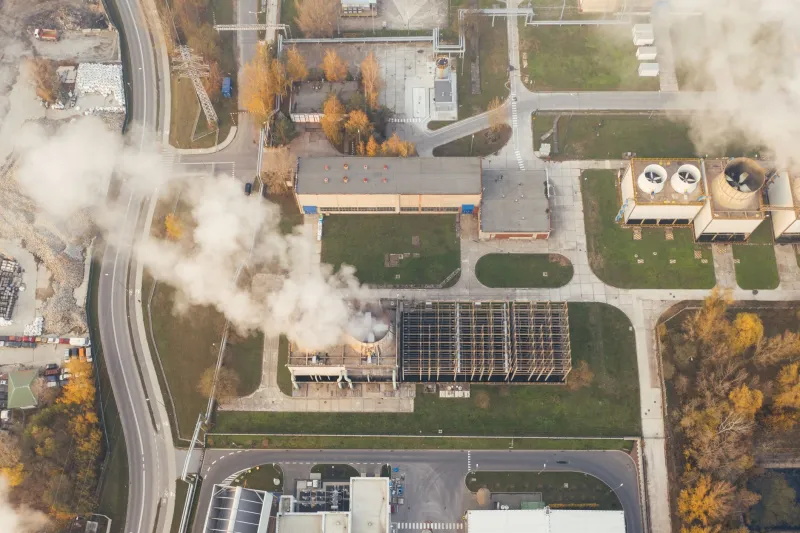
Do As We Say, Not As We Do: The Environmental Cost of Environmental Science Research
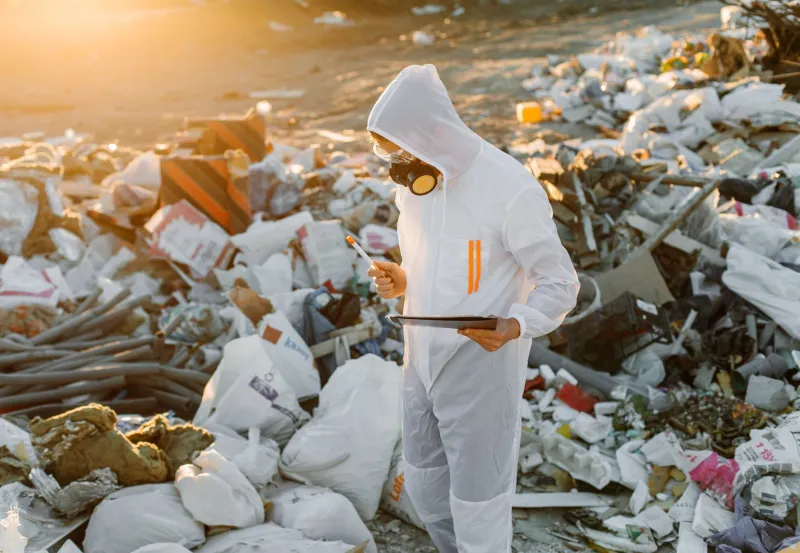
The Lab at the Center of the Storm
Imagine a research group that spends its days modeling the carbon impacts of industrial supply chains, publishing papers on the toxicological effects of single-use plastics in aquatic ecosystems, and training graduate students to become the next generation of environmental advocates. Now imagine that same group ordering freezer-packed reagents shipped overnight from across the country, running ultralow-temperature freezers at -80°C around the clock, disposing of dozens of single-use plastic pipette tip boxes every week, and cooling high-performance computing clusters with energy-intensive air conditioning systems.
This is not a hypothetical scenario. It is a description of routine operations in a significant proportion of environmental science departments at research universities across the United States. And it represents an institutional contradiction that the field has been remarkably slow to confront.
The Numbers Behind the Discomfort
Academic research laboratories are among the most energy-intensive built environments in existence. A 2012 analysis by the University of California system found that research laboratories consume five to ten times more energy per square foot than standard office buildings, owing to ventilation requirements, specialized equipment loads, and continuous operation schedules. More recent estimates suggest that the global research sector generates approximately 5.5 million metric tons of plastic waste annually—a figure that rivals the plastic output of some mid-sized industrial sectors.
Within the life sciences and environmental sciences specifically, single-use plastics are ubiquitous: pipette tips, centrifuge tubes, sample collection vessels, gloves, and packaging materials accumulate in quantities that would be difficult to justify in virtually any other professional context. A 2015 study in Nature estimated that life science laboratories in the United States, United Kingdom, Europe, and Australia collectively discard approximately 5.5 million tons of plastic waste per year. A substantial portion of this waste stream is generated by researchers who study the ecological consequences of plastic pollution.
The irony is not lost on the scientists themselves. In surveys of laboratory personnel at research universities, awareness of the environmental impact of lab operations is nearly universal. Action is considerably rarer.
Why Culture Is the Primary Barrier
The gap between knowledge and practice in academic laboratories is not primarily a technical problem. It is a cultural one—and understanding the specific features of academic research culture that perpetuate unsustainable practices is essential to designing effective interventions.
First, competitive pressure creates powerful incentives against efficiency. Grant cycles reward productivity metrics—publications, discoveries, data outputs—not resource minimization. A principal investigator who slows experiments to consolidate reagent orders, batch shipments, or share equipment with neighboring labs may lose days or weeks in a competitive landscape where being first to publish can determine career trajectories. The institutional incentive structure actively works against the behavioral changes that would reduce environmental impact.
Second, the decentralized structure of university laboratories makes collective action difficult. Each principal investigator operates a largely autonomous unit with independent procurement, waste disposal, and operational decisions. There is no equivalent to a corporate sustainability officer with authority to implement system-wide changes in purchasing or energy management at the laboratory level. Sustainability initiatives that require coordination across dozens of independent research groups face coordination costs that are rarely budgeted for.
Third, and perhaps most fundamentally, there is a status dimension to resource consumption in academic science. Large freezer banks signal productive sample collection. Overnight shipping of reagents signals the capacity to move quickly. High-throughput equipment signals methodological sophistication. Reducing these inputs can feel, culturally, like a signal of diminished scientific ambition—a perception that sustainability advocates within the academy must actively work to dismantle.
The Circular Economy Framework and Its Academic Applications
The circular economy—an economic model premised on eliminating waste through the continual reuse of materials and resources—offers a conceptual framework that translates more naturally to laboratory settings than many practitioners recognize. Several European research institutions have pioneered applications of circular economy principles to laboratory operations with documented success.
At the University of Exeter, a laboratory plastic recycling program established in 2018 diverted more than 90 percent of eligible plastic waste from landfill within its first year of operation, partnering with a specialized recycler capable of processing laboratory-grade plastics that standard municipal recycling streams cannot accept. At Vrije Universiteit Amsterdam, a shared equipment registry reduced redundant instrument purchases across the institution by an estimated 30 percent over three years, with corresponding reductions in embodied energy and manufacturing emissions.
In the United States, programs like the My Green Lab certification initiative have begun creating structured pathways for American research laboratories to assess and reduce their environmental impact across energy, water, and waste dimensions. Early adopters include laboratories at Stanford, MIT, and the University of Michigan. The certification framework is notable for its recognition that laboratory sustainability improvements must be compatible with—not antagonistic to—scientific productivity, a framing that has proven more persuasive to research faculty than purely normative appeals.
What Environmental Science Owes the Field It Studies
There is an argument—one I find increasingly difficult to dismiss—that environmental science departments have a particular obligation to lead on laboratory sustainability, not because they are uniquely culpable, but because their disciplinary expertise makes the case for change most legible. A chemistry department that operates unsustainably may be acting inconsistently with broad social values. An environmental science department that does so is acting inconsistently with its own published findings.
This distinction matters for credibility. Public trust in environmental science—already contested in some segments of American political culture—depends partly on the perceived integrity of the institutions that produce it. When research universities announce ambitious carbon neutrality targets while their laboratories consume energy and generate waste at rates that undermine those targets, the contradiction is visible to critics and corrosive to institutional credibility.
More fundamentally, the culture of environmental science shapes the scientists it produces. Graduate students who spend five or six years in laboratories that treat single-use plastics as unremarkable, that normalize overnight shipping and continuous equipment operation without attention to energy cost, absorb those norms as professional defaults. Shifting laboratory culture toward circular economy principles is not only an operational imperative—it is a pedagogical one.
A Call for Structural Change, Not Individual Virtue
This argument is not a call for individual scientists to feel guilty about their pipette tip consumption. Individual behavior change without structural support is an inadequate and unfair response to a systemic problem. What is needed is institutional architecture: procurement policies that prioritize suppliers with documented sustainability practices, grant reporting requirements that include resource consumption metrics alongside scientific outputs, shared equipment registries that reduce redundant purchasing, and laboratory design standards that incorporate energy efficiency from the outset rather than as an afterthought.
Some of this architecture is beginning to emerge. But its development is slower than the urgency of the environmental problems these same institutions are studying would seem to demand. The environmental science community has the analytical tools to measure this problem, the disciplinary knowledge to solve it, and the institutional platforms to advocate for the structural changes required. What remains is the will to apply those tools inward—to treat the unsustainability of academic research not as an uncomfortable footnote, but as a research problem worthy of the field's full attention.